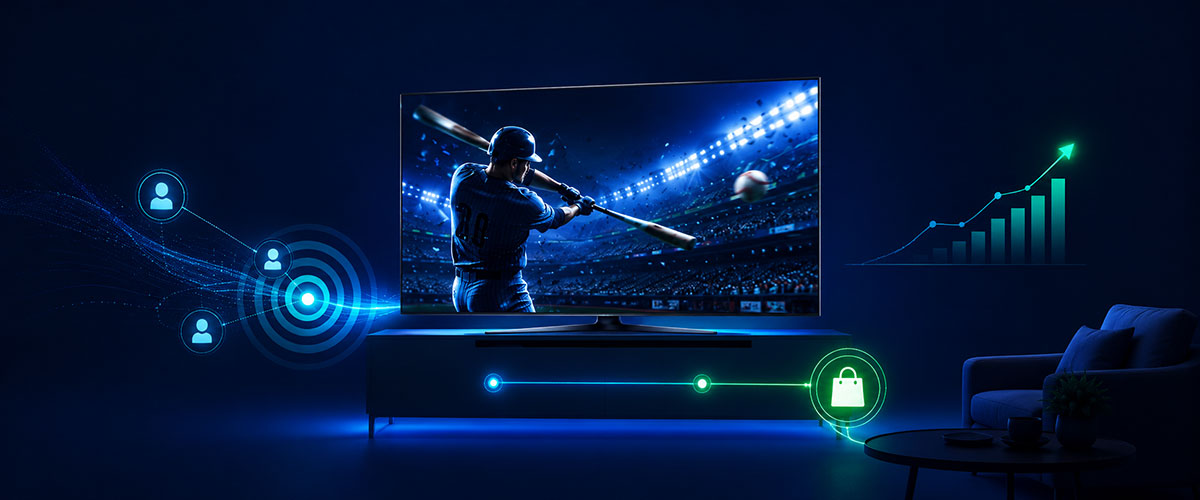
For years, Connected TV (CTV) carried a reputation as a top-of-funnel marketing channel — a place to build brand awareness, but not necessarily one to drive measurable performance.
That perception is quickly becoming outdated.
Advancements in audience targeting, attribution, AI, and creative production have transformed CTV into a performance channel capable of driving measurable business outcomes alongside search, social, and other digital media.
In a recent episode of AdLab, we sat down with Dan Terek from MNTN to discuss how the CTV landscape has evolved, why brands of all sizes should be paying attention, and what marketers should have in place before investing in the channel.
The Biggest Myth About Connected TV
The most common misconception surrounding CTV is that it remains primarily an awareness play.
Historically, that assumption made sense. Television advertising lacked the targeting and measurement capabilities that performance marketers expect from channels like Google Ads or Meta.
Modern CTV platforms have closed that gap entirely. They now leverage AI-powered audience modeling, sophisticated optimization algorithms, and expansive datasets to identify high-intent audiences in much the same way paid search and paid social platforms do. Brands can deliver highly targeted campaigns designed to influence measurable actions — not simply broadcast a message to broad audiences.
The result is a channel that contributes throughout the entire customer journey, not just at the awareness stage.
Attribution Has Come a Long Way
Measurement concerns have lingered among marketers — and understandably so. If someone can’t click on a television ad, how do you know whether it’s working?
Today’s attribution capabilities provide far more visibility than most marketers realize.
Most CTV platforms connect ad exposure to downstream website activity using household-level IP matching. Integrations with platforms like GA4, Rockerbox, Northbeam, and Triple Whale allow marketers to evaluate CTV alongside their existing marketing mix. Brands can now track how CTV contributes to:
- Website visits
- Online purchases
- Foot traffic for brick-and-mortar businesses
- Brand lift and purchase intent
- Incremental revenue
The methodology differs from click-based attribution, but CTV has become another measurable, accountable component within a broader omnichannel strategy.
Why Live Sports Matter More Than Ever
The growth of streaming has fundamentally changed how audiences consume live sports. As more viewers migrate from traditional cable to streaming platforms, brands have gained access to some of the most engaged audiences in digital advertising.
Live sports deliver something every marketer is chasing: attention.
Viewers are less likely to multitask, more engaged with the content, and more receptive to advertising that sticks.
Beyond driving immediate site visits, that attention builds brand recall — the kind that influences a purchase decision when a consumer is browsing Amazon, comparing products online, or standing in front of a retail shelf. Familiarity drives preference, and preference drives conversion.
Performance marketing isn’t always about the immediate click. Sometimes it’s about ensuring your brand is the one customers remember when they’re ready to buy.
Smaller Brands Can Play at This Level
Another outdated assumption is that CTV is only accessible to large brands with six-figure media budgets.
AI-driven targeting and advances in audience data have significantly lowered the barrier to entry. Smaller businesses can now advertise on premium streaming inventory with budgets that would have been insufficient to reach qualified audiences efficiently just a few years ago.
The advantage belongs to brands that target smartly — not brands that simply spend more.
AI Is Changing Creative Production
Creative production has historically been one of the biggest obstacles to CTV adoption. Producing television-quality commercials required significant time and budget, making meaningful experimentation difficult.
That dynamic is changing rapidly.
AI-powered creative tools now allow brands to generate multiple video concepts, test messaging variations, iterate on creative assets, and identify top-performing approaches before committing to high-end production. Marketers can now:
- Generate multiple creative concepts quickly
- Test different messaging and calls-to-action
- Identify winning creative directions
- Invest production budgets behind proven concepts
- Continue optimizing with AI-generated variations
The result is a faster, significantly less expensive creative testing cycle than was possible even a few years ago. (For a broader look at how AI is reshaping digital advertising strategy, our recap of the POSSIBLE conference covers emerging trends worth paying attention to.)
Preparing Your Brand for Connected TV
Before launching a CTV campaign, brands don’t need everything perfectly in place — but a few foundational elements dramatically improve the odds of success:
- A functional, conversion-ready website
- Consistent traffic that provides meaningful audience signals
- Clear campaign objectives — whether acquisition, brand recall, or both
- Existing creative assets or brand guidelines that AI tools can build from
Most importantly, brands should approach CTV as part of an integrated marketing ecosystem. The strongest results come when CTV works alongside paid search, paid social, email, and attribution platforms. Each channel reinforces the others.
Why Now Is the Time to Test
For e-commerce brands preparing for the holiday season, summer is an ideal window to start testing. Launching early gives marketers time to:
- Establish baseline performance
- Test creative variations
- Measure incremental lift across other channels
- Refine audience targeting
- Scale campaigns before peak shopping periods arrive
Waiting until Q4 means competing during the most expensive advertising season of the year — without the performance data needed to optimize effectively. Brands that start earlier enter the holidays with stronger creative, better audience insights, and a more mature measurement strategy.
For brands evaluating CTV alongside other demand-generation channels, our guide to lead-generation services is a useful reference for thinking through how each channel fits your growth model.
The Future of CTV Is Performance
Connected TV has earned its place in the performance marketing mix. As AI, attribution, audience targeting, and creative technology continue to evolve, its role will only grow.
For brands already investing in paid search, paid social, and ecommerce growth, CTV isn’t about replacing existing channels — it’s about making them work harder. Brands that embrace CTV today gain more than another advertising channel. They gain another measurable lever for driving growth.