Globalization didn’t slow down after COVID — it’s about to double.
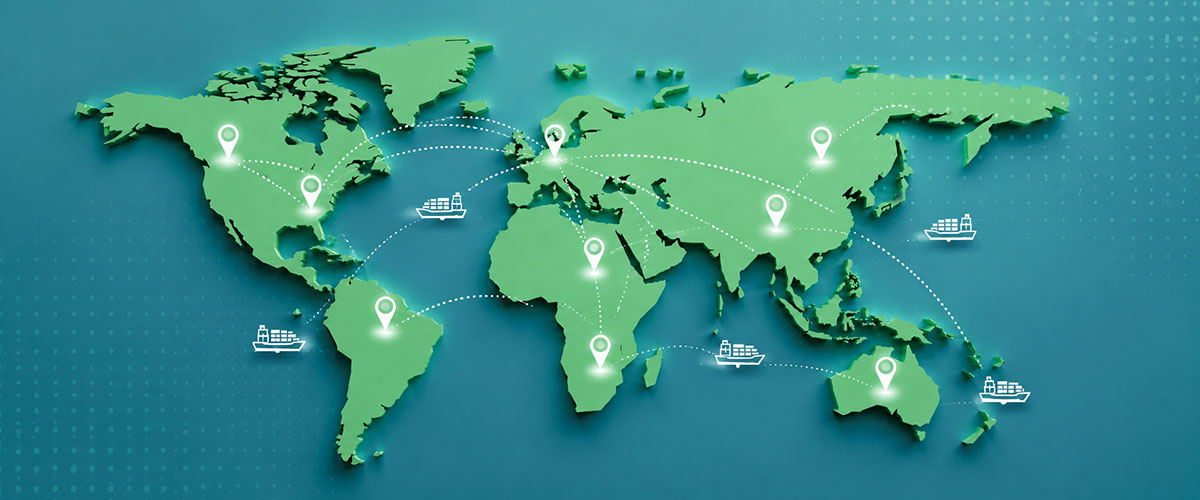
One of the most common misconceptions is that cross-border ecommerce cooled off after the pandemic. The data says otherwise. Cross-border ecommerce is projected to more than double between 2023 and 2028, and nearly 43% of Gen Z shoppers already buy from a retailer in another country at least once a month.
For brands still running a US-only strategy, that’s a growth opportunity sitting untapped — a topic we dig into further on the AdLab podcast.
The US Is a Smaller Slice of the Pie Than You Think
It’s easy to assume the US is the center of digital commerce. The numbers say otherwise: just 5% of the world’s internet users are based in the US. A US-only strategy isn’t just leaving some growth on the table — it’s ignoring 95% of the addressable digital audience.
That gap shows up in search behavior, too. More than 55% of Google searches are in languages other than English. An English-first strategy — however unintentional — already caps a brand’s addressable market at less than half of total demand.
Where to Start: Proximity Over Ambition
International expansion should prioritize what’s actually being sold:
- Shipping a physical product? Start close to home. Canada and Mexico alone can increase reach by 50% versus a US-only footprint, without the shipping costs and logistics complexity of expanding overseas.
- Selling software or a digital product? Start with English-proficient markets — Canada, the UK, Australia, and, notably, India, which ranks among the largest English-proficient markets by population size alone.
The common thread: match the first market to existing infrastructure, whether that’s shipping capability or language support, rather than chasing the biggest opportunity first. That often starts with PPC campaigns built around Performance Max and localized shopping feeds — the same approach LP used to help WOLFpak grow gross sales abroad by 33% across Germany, France, Italy, the UK, Mexico, and Canada.
Fragmentation Isn’t What You Think It Is
Fragmentation gets blamed for a lot of things, but the reach problem isn’t really about platforms splintering. YouTube and Google have held the top spot as the most-streamed platform for three years running, with 77% of global consumers reporting daily use. Reach isn’t fragmented. Strategy execution is.
AI is adding a new layer to that fragmentation — and it’s not simplifying the path to purchase the way most marketers assume. Shoppers using AI assistants like Gemini have 1.8x as many touchpoints as those who aren’t. Rather than streamlining the journey, AI assistants are expanding the number of places a brand needs to show up to be considered. As AI adoption increases, so does the surface area brands need to cover.
Full-Funnel Beats Bottom-Funnel, Every Time
One of the most common traps brands fall into is pursuing a new market with only bottom-of-funnel media. It works — for a while. Demand gets captured, results look great, budget increases, and then the well runs dry, because nothing was built to generate new demand in the first place.
Before writing off a new market as underperforming, it’s also worth checking whether conversion tracking is telling the full story — tracking gaps are especially common in newly launched international campaigns and can make a market look weaker than it actually is.
The fix is treating a new market the way most brands already treat their home market: full-funnel from day one, even before brand recognition exists locally.
Two other factors matter just as much as funnel strategy:
- Localization beyond translation. Language is only the starting point. Germany illustrates why: German consumers respond strongly to trust signals like security badges on a landing page, a preference driven by regional buying psychology.
- Post-click experience. Product pages, checkout flow, and payment providers all directly affect international conversion rates, independent of how strong the top-of-funnel strategy is.
What’s Next: Agentic Shopping
Looking ahead, one shift is already in motion: the rise of AI agents completing purchases on a shopper’s behalf. That raises a new question for every brand’s international strategy — is the content and infrastructure being optimized for a human shopper, an AI agent, or both? This shift is expected to play out over the next 18 months to three years, not five, meaning brands that wait risk falling behind on infrastructure that will soon be standard.
LP Is Now Google IGAP Certified
This is also why LP recently earned certification in Google’s International Growth Agency Program (IGAP) — an invitation-only program for elite Premier Google Partners, with fewer than 1% of agencies globally holding IGAP status. The certification gives LP direct access to Google’s proprietary market data, forecasting tools, and 1:1 support from Google’s International Growth Team, all built specifically to help brands scale internationally with less risk and more precision.
Ready to explore what international growth could look like for your brand? Let’s discuss how we can build a full-funnel, data-driven strategy that scales across borders.