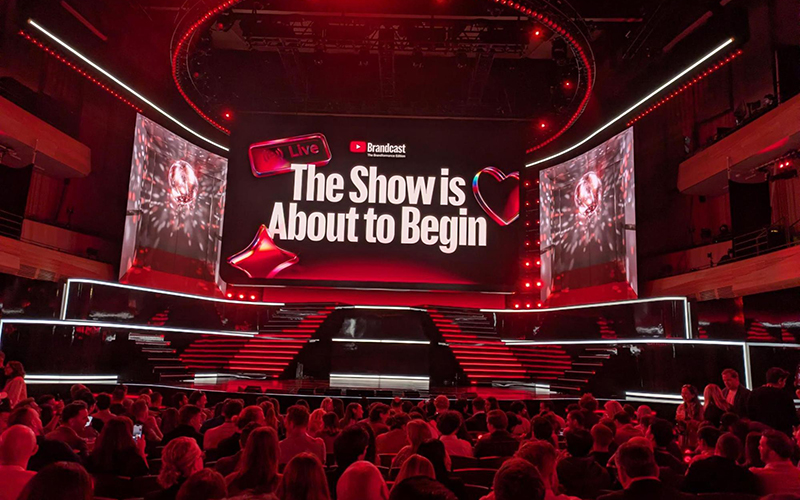
Our team made the trip to New York City for YouTube Brandcast 2026 — The Brandformance Edition. The event brought together top agencies and brands for a full day centered on one message: we’re in the YouTube Era, and the opportunity for advertisers has never been bigger.
The day kicked off with an exclusive agency breakout session covering video measurement and creative strategy, before moving into the main Brandcast show — an impressive, full-scale production featuring dancers, performers, and celebrity guest speaker, Trevor Noah. As a platform, YouTube effectively took over the Big Apple, with ads dominating Times Square. The point was impossible to miss: Google is making a serious push on YouTube in 2026.
Here’s what actually mattered from a strategy standpoint for our agency.

Emmy Luciano (left) and Karly Scott (right) at Brandcast in New York City.
YouTube Is a Full-Funnel Platform
The throughline of the entire event was that YouTube is the most underutilized revenue platform in advertising. They’re not competing just with streaming or social anymore — YouTube is positioned for the creator economy, alongside search, entertainment, TV, social, and performance media all at once.
The data backs it up: Demand Gen campaigns take center stage as a top performance driver, with 18% higher conversions than other paid media channels. Another note for advertisers: 45% of Shorts users aren’t on TikTok, which matters for brands seeking unique audience segments.
The bigger shift in thinking, as Karly put it: “It’s about taking YouTube away from performance marketing and moving it into branding.” That’s the “Brandformance” framing — and it’s really the conclusion of the whole day. Investing in your brand through demand gen, with YouTube as the vehicle, is the move advertisers need to make to win.
Relevance Drives Attention Spans
Trevor Noah made a compelling argument: people don’t have shorter attention spans; they just have more choices. Someone will play a video game for five hours if they’re interested. The job of advertisers isn’t to fight for attention — it’s to find the right people and give them something genuinely engaging.
It’s a useful reframe. YouTube users come to the platform with intent, whether to learn, solve a problem, or be entertained. That’s a fundamentally different mindset than scrolling a feed.
Emotional Storytelling Has to Drive Action
The event featured several brand exposés, reinforcing that authentic, emotionally resonant creative outperforms polished corporate messaging. The wine brand, Josh Cellars, used YouTube to share their emotionally engaging origin story, driving a 8.5% sales lift. Similarly, medical uniform supplier FIGS leaned into real stories from nursing professionals to build real connections. The pattern was consistent: when people feel recognized, they respond.
Allianz, a travel insurance brand, used YouTube demand-gen campaigns to shift consumer mindset — turning what felt like an annoying add-on at checkout into something people adopted early in the buyer journey. Investing in educational storytelling upfront increased conversions. It’s a great example of demand gen doing what it’s supposed to: getting buyers ready before the moment of purchase.
AI Is Removing the Creative Bottleneck
One of the biggest operational takeaways is the shift from “Do we have the resources to produce creative?” to “What should we make?” Tools like VO Asset Studio can turn static images into video. Google Vision AI can identify which creative elements are actually driving performance. The barriers to production are dropping fast.
That said, strategy and insight still matter more now than ever. The competitive edge is shifting to whoever can produce the right content, at the right time, to maintain relevance.
A practical note: running at least 5 creatives for Demand Gen campaigns is recommended, with at least one vertical video and content built specifically for YouTube rather than repurposed from other platforms.
Creators Are Core Infrastructure Now
Creators came up in nearly every session. YouTube’s data showed that when creators talk about products on YouTube, viewers are 13x more likely to search for the brand and 5x more likely to buy. A creator-led campaign by Coach targeting Gen Z, resulted in a 60% jump in brand awareness in a single quarter.
The framing has shifted. Creators aren’t influencer add-ons — they’re distribution, credibility, storytelling, and community all rolled into one. Brands that find creators who already love their product and give them room to be authentic are seeing the strongest outcomes.
The Bottom Line
The overarching theme of Brandcast 2026 was the convergence of AI, creators, and performance media — and YouTube’s argument that it’s the only platform positioned to deliver on all three simultaneously. Whether or not you buy the full pitch, the direction is clear: brands that treat YouTube as a branding vehicle, not just a performance channel, and invest earlier in storytelling and demand creation, are going to be better positioned as buying behavior continues to evolve.
Questions about YouTube strategy or how these trends apply to your campaigns? Reach out to your account team.