

Overview
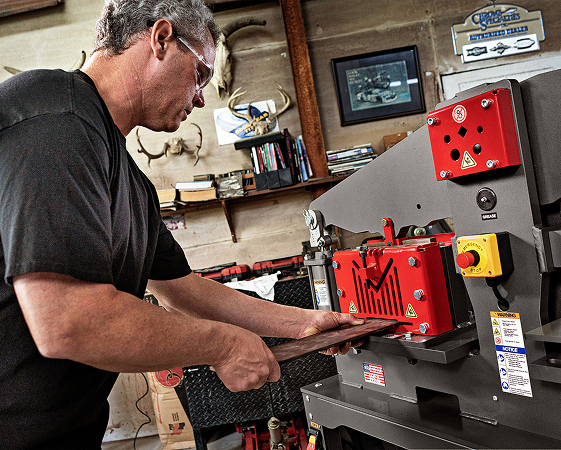
Penn Tool is an industrial tool supplier, serving customers across precision measurement, machining, cutting, and workholding equipment. Managing paid media at this scale requires a balance of automation, calculated segmentation, and constant optimization across platforms.
After briefly leaving Logical Position to work with another agency, Penn Tool experienced a decline in paid performance. They returned looking for a modern rebuild, not a patch, that could scale with their catalog size while remaining profitable amid market volatility.
The Problem
After testing another agency, Penn Tool saw a decline in efficiency across paid channels and a drop in sitewide revenue. One of the biggest challenges was understanding how each platform contributed to overall performance. Paid social drove significant traffic and assisted conversions, but that impact primarily occurred outside traditional last-click attribution, making it difficult to isolate performance and allocate budget accordingly.
Managing more than 500,000 products introduced additional complexity, as lower-margin items absorbed spend and limited visibility of high-value categories. This was further amplified amidst rising costs for raw materials and manufacturing, limiting campaign profitability. Penn Tool needed more than tactical fixes—they required a fully connected paid media approach that aligned attribution, budget allocation, and performance across channels to support sitewide growth.
The Strategy
Paid search and paid social were rebuilt using a holistic approach to support scale, efficiency, and sitewide growth.
Paid Search
Products were segmented into five categories, with low-margin products isolated to prevent budget cannibalization. Campaigns were further split into asset-based and assetless structures, allowing greater control over traffic quality and intent across Google and Microsoft.
Performance Max
Leveraging automations across Google and Microsoft to scale campaigns, with Google delivering volume and Microsoft balancing efficiency. This dual-platform approach ensured broader coverage while maintaining strong performance benchmarks.
Paid Social
Paid social functioned as a traffic amplifier, using Dynamic Product Ads to reach high-intent new and returning users. Prospecting and remarketing were balanced with Advantage+ and Target ROAS bidding once sufficient pixel data was available.
Performance Alignment
Flexible budget across Google, Microsoft, and Meta based on opportunity and headroom. Success was measured by sitewide performance to reflect the impact of each channel within the whole marketing ecosystem.
The Outcome
In year-over-year comparisons for 2024 to 2025, the following metrics were achieved.
+70%
Conversions
+194%
Revenue
+41%
Conversion Value
+156%
Landing Page Views
+21%
Purchases
+222%
New Users
Sitewide Growth Sustained
By rebuilding its paid media strategy with modern structures, Penn Tool has created an opportunity to scale revenue efficiently amid rising costs. Consistency has reduced the need for reactive optimizations, allowing internal teams to focus on higher-level initiatives without stalling growth. Improved sitewide visibility into performance also enabled cross-channel decision-making, giving Penn Tool the flexibility to shift budgets based on opportunity. This stability has supported reinvestment in broader business improvements, including exploring enhancements to on-site search and user experience that support its extensive product catalog.