For years, the path to purchase has run through a predictable set of steps: search, click, land on a website, convert.
That path is starting to fork.
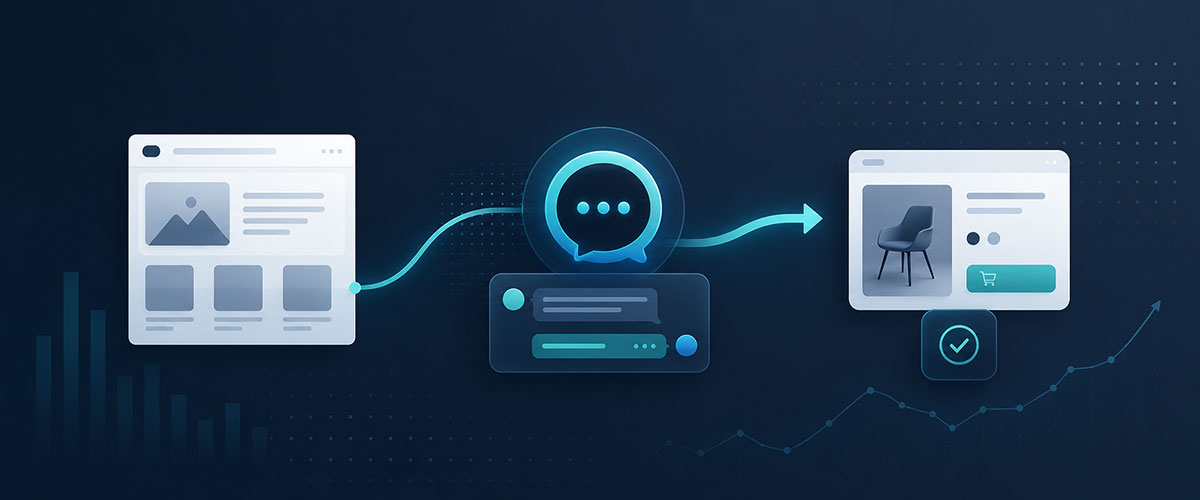
Advancements in AI assistants and conversational commerce are giving consumers a second route to purchase, one that runs through a conversation with an AI agent instead of a traditional website. And the data suggests that shift is happening faster than most brands are prepared for.
In a recent episode of AdLab, we sat down with CP McBee from Microsoft Advertising to discuss how AI is reshaping the customer journey, what brand agents are and how they work, and how Microsoft Clarity is helping brands measure their way through it.
Purchase Intent Is Already Shifting
ChatGPT launched paid ads earlier this year, moving to a self-serve Ads Manager by May 2026, with national retailers testing product cards and pricing directly inside a chat. Microsoft is seeing the same shift on its own platform: time spent in Copilot lifts purchase intent by 54%, and up to 200% when someone arrives already intending to buy.
Two of the biggest platforms in tech are racing to put a “buy” button inside a conversation. That’s not a coincidence. It’s a signal that the decision-making process itself is moving, and brands that aren’t part of that conversation are getting left out of it entirely.
The Three Webs Framing
When it comes to operations on the internet, there are actually three lanes users fall into, essentially creating three unique experiences.
- The human web: the traditional experience of blue links, clicks, and website conversions. Still driving the majority of commerce today.
- The LLM web: how consumers engage with AI through conversation, whether that’s typed or spoken.
- The agentic web: where consumers ask AI to actually complete tasks on their behalf. Book this. Buy that. No click required.
The human web isn’t going anywhere yet. But the shift toward AI-assisted and agentic experiences is moving fast, and brands need a strategy for all three, not just the one they’ve spent the last twenty years optimizing for.
What Brand Agents Actually Do
The term “agent” is being used a lot lately without much definition. We’ve covered how Microsoft brand agents drive conversions in more depth before, but it’s worth revisiting the fundamentals.
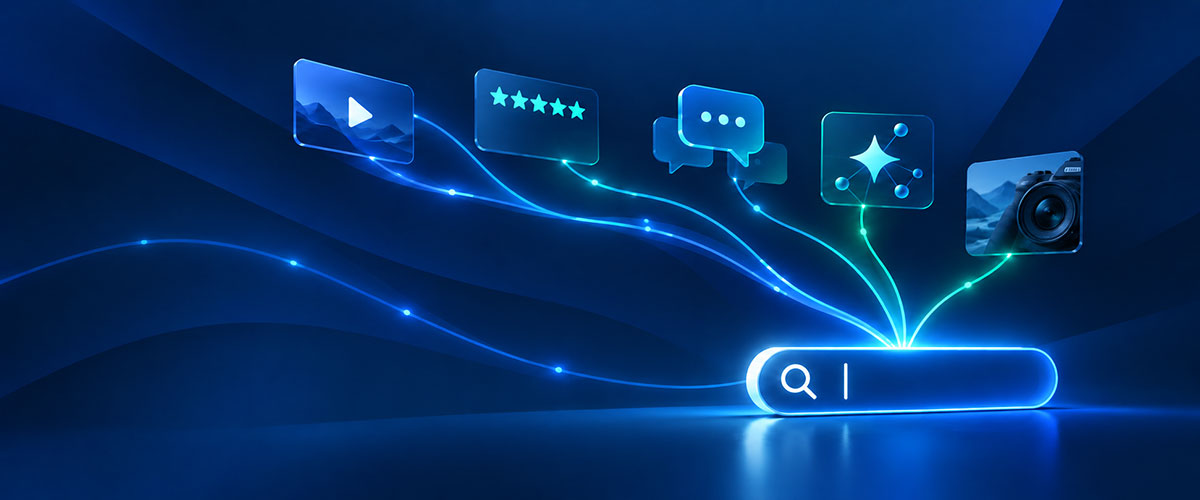
Microsoft splits agents into three categories: consumer agents (Copilot, ChatGPT), enterprise agents (Copilot at work), and brand agents, which sit in between. A brand agent lives on a company’s website in the same spot a consumer might expect a search bar, but instead of returning a list of results, it opens a conversation. A shopper looking for party supplies can talk through what they need, get recommendations, and move all the way to purchase without ever hunting through a traditional site structure.
Brands using brand agents see double, sometimes triple, the conversion rate. And because brand agents run on Clarity, brands can see exactly how AI engages with their site and where the opportunities are to improve it.
There’s a third piece here that matters just as much as the conversion lift: representation. As consumer agents increasingly shop on a customer’s behalf, brands need their own agent in that conversation. Otherwise, someone else decides what gets recommended.
What It Takes to Show Up in the Conversation
Naturally, the next question is: how does a brand actually get prioritized by these AI systems?
The answer comes down to making a site machine-readable: structured content, tables, FAQs, structured data, and schema markup. Agents scan the web for trustworthy, authoritative information to bring back to the consumer, and they pull in the brands that structure their content clearly. This is the technical foundation underneath what’s often called GEO (generative engine optimization), and it’s quickly becoming as fundamental as traditional SEO.
The Data Behind the Shift
A few numbers from the conversation are worth sitting with:
- Purchase time drops by roughly 33% for consumers using AI assistants through the buying journey.
- In a recent survey of 1,000 people, 60% said they’d be fine with, or would prefer, a brand agent replacing a traditional website.
- Purchase intent rises 54% simply from time spent in Copilot, and up to 200% when intent already exists.
Put together, this isn’t a story about a niche behavior. It’s a story about consumer comfort with AI-assisted shopping accelerating quickly, and the brands paying attention now are the ones building an advantage before it becomes table stakes.
Where This Is Heading
The next wave of AI-assisted shopping is expected to start with routine, low-consideration purchases: household goods, repeat buys, the stuff nobody particularly enjoys shopping for. As consumers build trust with AI recommendations in that low-stakes territory, that trust should expand quickly into higher-consideration categories.
For brands, the preparation work is the same regardless of category: understand how agents are currently viewing your site, and build the structural foundation that lets AI take action on your behalf.
LP and Microsoft: Building This Together
LP is a Microsoft Advertising partner and has been working directly with Microsoft on brand agents and Clarity. That partnership is built around a shared goal: giving brands their own advocate in the agentic web, backed by the reporting to prove it’s working.
Clarity itself is free, and gives brands heat maps, session recordings, and summaries that show exactly where shoppers get stuck. LP can run the full setup for clients, from initial configuration and brand voice training to using Clarity’s insights to continually tune how a brand agent performs, alongside the PPC management strategy already driving performance across Microsoft’s paid ecosystem.
Get Ready Before the Holidays Hit
If there’s one takeaway from this conversation, it’s that the preparation window is now, not later. Holiday shopping season will generate the clearest data yet on how consumers are actually using these tools, and the brands that show up ready will be the ones capturing that demand.
CP will be joining us in person at LP Connect on August 20th in Portland, Oregon, where we’ll be going deeper on brand agents, Clarity, and what it takes to build a strategy across all three webs.
Want to see where your brand stands in the agentic web? Visit adlabpodcast.com for a free marketing review, and let’s find out where your biggest opportunities are before the holiday season gets here.